
Reawaken Change.
Stop being its victim. Start being its author.
For the last decade we’ve been told change is a programme, a strategy, a transformation initiative. A thing leadership does TO the organisation, and the organisation endures.
Then came AI. The pandemic. Hybrid work. Generational reset. Geopolitical whiplash. Markets reorganising in months instead of decades. And every change framework your organisation has built in twenty years has stopped working.
This keynote is how you stop managing change — and start authoring it.
In a world that won't stop changing, the cost of being reactive is everything.
Reactive
Proactive
Managed
Led
Inherited
Authored
The organisations thriving today are not the ones with the best change-management frameworks. They’re the ones whose people stopped seeing change as something done to them — and started seeing it as something they get to write.
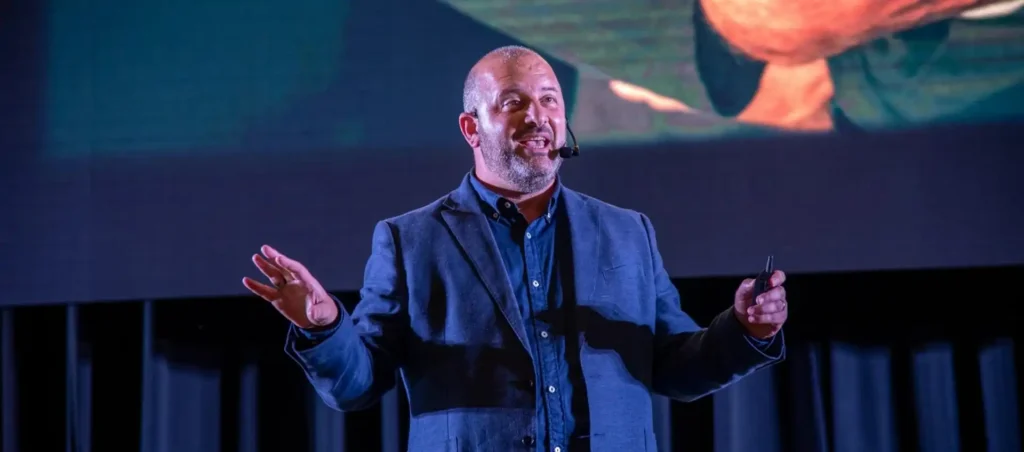
“Change is not a programme. It is not a strategy. It is not something the people at the top do to the people in the middle. Change is the air we breathe — and the question is whether your organisation has learned to breathe with it, or is still holding its breath.”
Richard Gerver
“
A feeling of powerlessness has become the most brutal disease of our age. The cure is not another framework. The cure is remembering that you were never powerless — you were just taught to wait.
Richard Gerver
Richard asks—
When did change start to feel like something done to you?
Pick the moment you stopped being its author. Richard will tell you what your organisation lost when you did.
Why your change frameworks have stopped working — and what to do instead.
For the last twenty years, change has been treated as a project. Something we initiate, manage, sequence, communicate, and complete. The thinking goes: if we just plan it well enough, people will get on board — and the change will stick.
It is one of the most expensive lies in modern business. Because the world stopped operating in discrete change events the moment AI, the pandemic, and a generational reset arrived. Change is no longer a thing that happens to your organisation. It IS your organisation, every day.
This keynote draws on my book Change, on twenty years of leading organisations through it, and on what I have learned since the book was first written about how much faster and stranger the world has become.
This is the keynote your people will still be talking about a month later. Not because of what they were told — but because of what they were given permission to start.

Change
Penguin · Bestseller
What your audience moves through.
A keynote is a journey, not a download. Here’s the path I’ll take your people on — drawn from the ten-chapter spine of Change and tailored for your organisation, your industry, and the specific moment your business is in.
When did change start to feel like something done to you?
Most rooms haven’t been asked this in years. We start with the moment it happened to each person — the first time change stopped being something they did and became something they survived.
Change is the only constant. So why do we keep being surprised by it?
The first chapter of the book is about reorientation. Why we have been taught to treat change as exceptional when it has always been the rule. And why “powerlessness has become the most brutal disease” of our age — even though every adult in your room was once a child who handled change daily.
You cannot lead change you don't believe in yourself.
The work begins where most leadership programmes won’t go — with the leader’s own relationship to change. If your senior team still secretly wishes for the old certainty, no transformation will hold. The first job is internal.
From the bottom 5% to the top 5% in two years.
A failing school. A community that had been told for decades what it would become. We rebuilt it from the inside out with three words — living, learning, laughing — and a refusal to treat change as something done to people. Two years later, UNESCO came calling. A seven-year-old at the school, asked by a government inspector why she liked it there, answered without being prompted: “This school is famous, and I made it famous.” That sentence is the whole keynote. And it’s the work I now do for the world’s most demanding organisations.
Stop asking how. Start asking what for.
The two chapters that change every executive team I work with. Most change initiatives die because they over-explain the how and under-imagine the what for. I’ll show your leaders how to flip that, with concrete examples from the boardroom.
Change is a community sport. Stop trying to win it alone.
The middle of the book is the practical work — how to share a vision so it sticks, how to develop the people who will carry it, and how to make the dozens of small choices that decide whether change lands or evaporates. The grown-up version of the playground we all once thrived in.
The legacy of change is not what you did. It's what you passed on.
The book closes — and so does the keynote — with the question every leader avoids: what survives you? The answer is never the strategy deck. It’s the people who watched you lead change and now know how to do it themselves.
Built around your business, your sector, your moment.
Every Reawaken Change keynote is rebuilt for the room. I’ll spend time with you before the event understanding your industry, your pressures, your culture and your audience — and the talk you receive is one only your organisation could have heard.
What he did for a school of children, he now does for the boardrooms of the world's most demanding organisations.
Same methodology. Same psychology. Same outcome. Different room.
A failing school. A community that had given up.
From the bottom 5% nationally to the top 5% in less than two years. UNESCO recognition.
The Grange transformation wasn’t a miracle. It was a method. It still is.
Seven capabilities. Reawakened, not installed.
Every organisation tells me it wants people who handle change better. The truth is your people already knew how. They were children. The work isn’t to teach them anything new — it’s to give back the capabilities they were trained out of.
If you're booking for any of these, you're booking the right talk.
Who this keynote is not for.
If you’re looking for a five-step change-management framework, a maturity model, or a speaker who’ll hand your audience a system they can quietly file away — I’m not your speaker, and that’s okay.
I don’t sell change management. I reawaken people’s capacity to author change themselves. If that’s not what you need, there are great consultancies who’ll do the other thing well.

“The practical embodiment of high-thinking on unleashing creativity and potential.”
From the stage to the strategy room.
Same keynote at the heart of all three. What differs is how deep the work goes — whether it ends when Richard walks off stage, follows your people home in a book, or moves directly into a working session with your executive team.