
Reawaken Curiosity.
The courage to be curious in a compliant world.
Your organisation is full of people who were once five years old. They were curious. They were creative. They had courage. Then they went to school, then to university, then to work — and somewhere along the way they were taught to stop.
Now you’re asking them to innovate. To adapt. To lead through complexity. To outpace AI. To stay human in a world that’s accelerating faster than any of us can comprehend.
This keynote is how you give them back what was taken.
In a world that won't stop changing, the cost of certainty is everything.
Certainty
Curiosity
Compliance
Creativity
Expertise
Exploration
The organisations thriving today are not the ones with the smartest people in the room. They’re the ones where people feel safe enough to wonder, challenge, play, experiment — and learn.
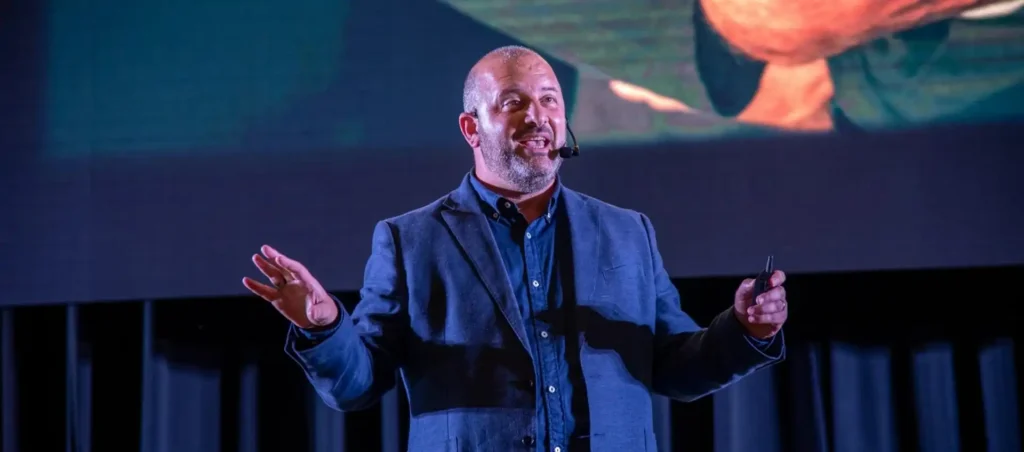
“Curiosity is not a soft skill. In an age of accelerating uncertainty, it is the only survival skill that matters.”
Richard Gerver
“
Curiosity feels like one of the few tools that can slow us down enough to listen, learn, and stay open when the world keeps pushing us toward certainty.
Richard Gerver
Richard asks—
What did you stop being curious about?
Pick the one that hits hardest. Richard will tell you what your organisation lost when you did.
Why curiosity is no longer a soft skill. It's a survival skill.
I spent twenty years as a teacher and headteacher. I watched five-year-olds walk into school as natural activists for their own dreams — and I watched, year after year, as we trained that capacity out of them. Then I spent twenty more years inside the boardrooms of Google, Microsoft, Visa, Olympic teams, and governments, doing the same work in reverse: helping leaders reawaken in their people what their organisations had systematically suppressed.
This keynote draws on both halves of that career, and on the spine of my forthcoming book Curiosity, to reframe what curiosity actually is — and why it has become the single most important leadership capability of this decade.
It’s not about asking more questions. It’s about having the courage to sit with what you don’t know long enough to discover what nobody else has noticed. It’s about creating cultures where people stop performing certainty and start practising inquiry.
This is the keynote your people will still be talking about a month later. Not because of what they were told — but because of what they were given back.
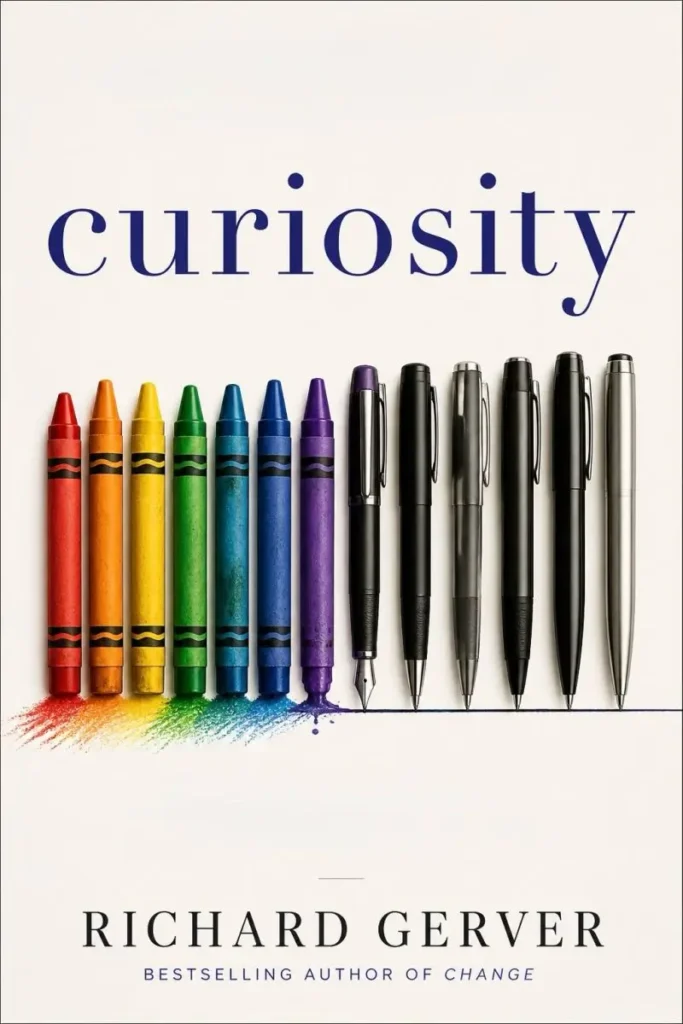
Curiosity
Bloomsbury · 2027
What your audience moves through.
A keynote is a journey, not a download. Here’s the path I’ll take your people on — drawn from the chapter spine of Curiosity and tailored for your organisation, your industry, and the specific moment your business is in.
Are you still curious?
Most rooms haven’t been asked this in twenty years. We start where every breakthrough starts — with the question itself. And with the proof that curiosity is not a personality trait. It’s a muscle. And like every muscle, it atrophies without use.
Living in an age of uncertainty.
Why we panic-buy toilet paper. Why we hoard certainty. Why every system you’ve ever been part of — school, work, society — has trained you to seek answers rather than ask better questions. And what that costs your organisation right now.
Learning from the five-year-old you used to be.
A five-year-old asks 300 questions a day. They experiment without fear of failure. They adapt in real time. They imagine possibilities adults dismiss. Every capability your organisation says it needs — they already had. And so did everyone in your audience.
"This school's famous and I made it famous."
A failing school in a community that had been told what it would become. Two years later, UNESCO came calling. The press called it the Walt Disney of the classroom. What we built there is the same thing your leadership teams need now — and the mechanism is identical.
Risk, resilience, and the courage to ask.
Curiosity requires us to let go of ego and lean into vulnerability. It is, at its core, an act of bravery. The most extraordinary breakthroughs in history came from what others dismissed as stupid questions. I’ll show your people how to ask the ones that matter.
Questions every leader leaves with.
Five questions every person in the room will ask themselves before they leave: What did I love at five that I’ve stopped doing? What question am I afraid to ask in my organisation? What would I do tomorrow if I switched off the satnav? Whose potential have I squandered? What makes my heart beat faster?
The courage to stay curious.
The future will not belong to those who cling hardest to what they already know. It will belong to those who remain curious enough to keep discovering what they don’t. I won’t fix anything for your organisation today. I’ll reawaken what was already theirs. What they do with it is the only thing that matters.
Built around your business, your sector, your moment.
Every Reawaken keynote is rebuilt for the room. I’ll spend time with you before the event understanding your industry, your pressures, your culture and your audience — and the talk you receive is one only your organisation could have heard.
What he did for a school of children, he now does for the boardrooms of the world's most demanding organisations.
Same methodology. Same psychology. Same outcome. Different room.
A failing school. A community that had given up.
From the bottom 5% nationally to the top 5% in less than two years. UNESCO recognition.
The Grange transformation wasn’t a miracle. It was a method. It still is.
Seven capabilities. Reawakened, not installed.
Every organisation tells me it wants more adaptive, imaginative, collaborative people. The truth is your people already are those things. They were five once. The work isn’t to teach them anything new — it’s to give back the capabilities they were trained out of. Here’s what your audience leaves with.
If you're booking for any of these, you're booking the right talk.
Who this keynote is not for.
If you’re looking for ten leadership rules, a five-step framework, or a speaker who’ll hand your audience a system they can quietly file away — I’m not your speaker, and that’s okay.
I don’t sell systems. I reawaken the capabilities your organisation already paid for and forgot it had. If that’s not what you need, there are great speakers who’ll do the other thing well.

“The practical embodiment of high-thinking on unleashing creativity and potential.”
From the stage to the strategy room.
Same keynote at the heart of all three. What differs is how deep the work goes — whether it ends when Richard walks off stage, follows your people home in a book, or moves directly into a working session with your executive team.