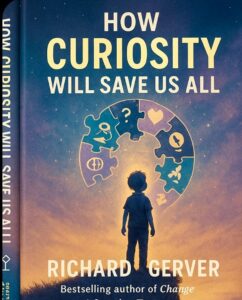
Given the events that are dominating the news right now and the tragic consequences that are occurring as a result, I wanted to share a very small sneak peek from my new book “How Curiosity Can Save Us all“, it seemed pertinent… this is a paragraph or two from a chapter called ‘#empowerment‘
Reactive problem solving currently takes up so much of our bandwidth and is exhausting, but possibility finding is not only more open-minded, but it can also be exciting and empowering, and it is contagious, it is the root of creative thinking and development.
When you think about the reflex most of us have when we are reacting to a problem, it is to want to find out who or what is to blame or to find a way to mop up the mess. It is less often that we ask what can we learn from this? As a society, given the cultures we are living through, caused by the uncertainty so apparent for so many, the disenfranchisement puts us on the back foot and means that we are increasingly responding reflexively rather than developmentally and as we keep doing that, we keep splintering, polarising and wasting energy looking for who to blame, which in turn fuels the sense of our own powerlessness. If we can shift the response to one that explores the learning from our circumstance and what we can do to evolve and develop, then we move away from defensiveness and towards growth and creativity.
One of the greatest challenges of the current digital age and the algorithms that have come to dominate so much of our thinking and our discourse, is our need to be right. In times of stress, it is a powerful dopamine hit that strokes our ego and insulates our fragility. It artificially inflates our sense of control. The problem is however that when we put all our energy into proving that we’re right, or that you are wrong, we amplify a polarisation that shuts down dialogue and promotes division. Curious people and indeed great leaders are confident enough to know that being ‘right’, isn’t the goal, they understand that the sustainable development that comes from empowerment is driven by learning and a desire to understand and to evolve. To be curious requires us to be prepared to challenge our own thinking and beliefs before we challenge others and it gives us the very best chance of surfing at the crest of the wave.
I try, whenever I can to ask myself,
What are the faults and weaknesses in my position/argument/belief?
Why might I be wrong?
Why could they be right?