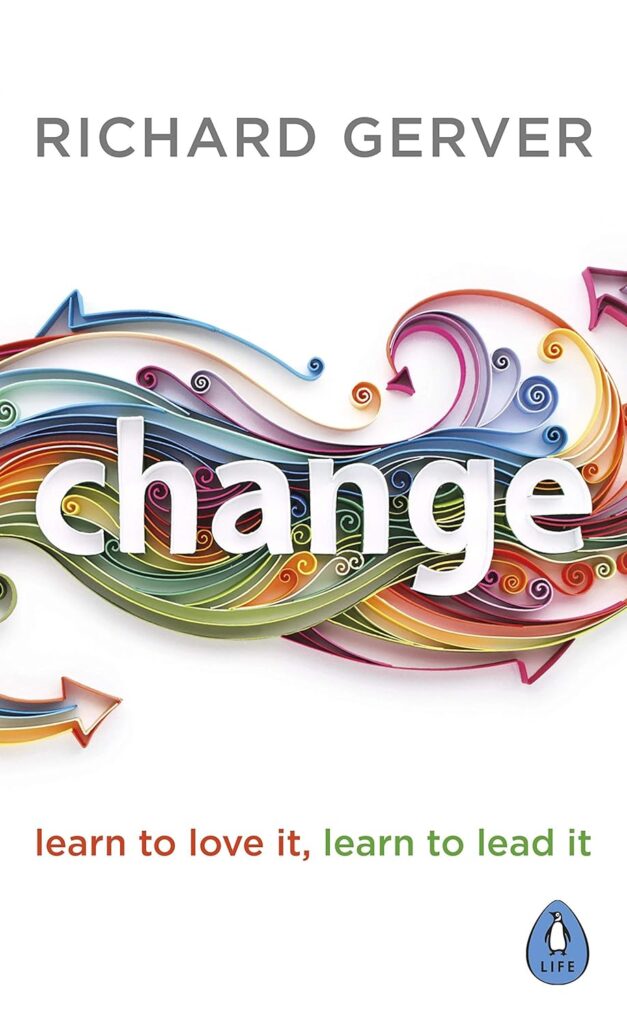
When I wrote Change, the world felt uncertain.
Technology was accelerating. Globalisation was reshaping industries. Schools, businesses and governments were all wrestling with the same question: How do we prepare people for a future we can’t predict?
Looking back now, it’s almost impossible not to smile.
We had no idea what was coming.
A global pandemic. Artificial intelligence becoming part of everyday life. Political division. Economic instability. Climate anxiety. A generation questioning not just what they do, but why they do it.
If anything, the pace of change has become exponential.
Yet the central message of Change remains exactly the same.
Change isn’t something we survive. It’s something we learn to embrace.
For too long we’ve treated change as an interruption to normal life—as a problem to be solved before things can “get back to normal.”
But what if change is normal?
What if uncertainty isn’t the exception but the environment in which we now live?
That shift in thinking changes everything.
The most successful people and organisations I’ve worked with over the last twenty-five years haven’t been those with the biggest budgets, the most impressive strategies or even the greatest expertise.
They’ve been the ones who stayed curious.
Who kept learning.
Who were willing to admit they didn’t have all the answers.
Who understood that adaptability is far more valuable than certainty.
Ironically, one of the biggest obstacles to change isn’t technology or competition.
It’s us.
Our brains crave predictability. We naturally seek comfort, routine and familiarity. We often mistake certainty for safety.
Yet growth has never happened inside our comfort zones.
Whether I’m working with schools, multinational businesses, healthcare organisations or governments, I see the same challenge.
People don’t resist change.
They resist fear.
They resist feeling incompetent.
They resist losing control.
The answer isn’t to push harder.
It’s to create environments where people feel safe enough to be curious again.
That belief has shaped much of my work since Change was published.
In many ways, my recent focus on curiosity is simply the next chapter of the same story.
Curiosity is what makes change less frightening.
Learning gives us confidence.
Play encourages experimentation.
Simple thinking helps us cut through complexity.
These ideas aren’t separate—they’re connected.
The future won’t belong to those who know the most.
It will belong to those who are most willing to keep learning.
That’s why I still receive messages from readers telling me that Change helped them navigate career transitions, leadership challenges or personal upheaval years after first reading it.
The context has evolved.
The principles haven’t.
Today, organisations talk endlessly about resilience, transformation and innovation.
Those things matter.
But underneath them lies something even more fundamental.
The willingness to learn.
The courage to stay curious.
The confidence to keep moving forward, even when the destination isn’t clear.
If I were writing Change today, I’d probably use different examples.
I’d talk about AI, hybrid working and the extraordinary speed of technological development.
But I wouldn’t change the message.
Because ultimately, change has never been about technology.
It’s always been about people.
And people still have an extraordinary capacity to adapt, to grow and to surprise themselves.
Perhaps that’s why Change continues to resonate.
Not because it predicts the future.
But because it reminds us that our greatest advantage has never been our ability to control change.
It’s our ability to learn through it.
And in a world that refuses to stand still, that may be the most important lesson of all. Buy the book here: https://amzn.eu/d/0i228wBm